Commercial vs Open Source Software
February 24, 2026
Yesterday I wanted to listen to some music. So I fired up my trusty Spotify client. I’m going to assume most of the world is familiar w/ Spotify by this point. If you’re not, a brief synopsis: This is where ppl younger than 60 listen to music.
Something occurred to me while using it. This thing sucks! That is to say 10 years ago Spotify was great. Today, it’s just objectively a poor app. The question is why? And that goes to the topic of today’s blog: commercial vs open source software.
Let me preface by saying these opinions are wholly my own. I’m sure others would disagree with some of these thoughts. Having said that, let’s jump into it.
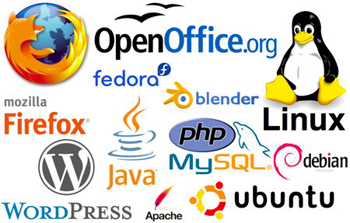
One of the hallmarks of this philosophy is you’re not being upsold. You’re using software that’s the side hobby of someone, perhaps even several someones, who just want something stable that works. And if something doesn’t work and you’re smart enough you can modify it, submit your changes upstream and possibly make the program better for everyone. Congratulations! You’ve just bettered society!
Now, as altruistic as this may be, it’s not exactly making ppl rich. Here’s a joke: “What’s the difference between an open source software developer and a large pizza? A large pizza can feed a family of 4.” And while some of the larger projects have successful crowdfunding or donations, many don’t.
Enter closed sourced projects.
Everyone deserves to be compensated for their work. The developers who choose to give it away for free, bless them. But I hold nothing against someone who wants to develop software for money. They put in the time and effort, they should see the fruits of those labors if that’s what they want. However, commercial software has a problem, and those problems generally arise in the boardroom.
Earlier I mentioned how Spotify was great 10 years ago. That’s because it was. Creating a sprawling ecosystem to allow the world’s music at your fingertips via the internet used to be a novel concept. And it took some work to make it happen. But those mad lads drank their Red Bulls, powered through and willed it into existence. And it was glorious! Then they ran into a problem: now what?
That’s the main problem as I see it with commercial software. They become victims of their own success. And while Spotify can be used without paying for it, they REALLY want that premium subscription. So they need to make it seem like a good deal. But if nothing ever changes, the program becomes stagnant. They risk having customers drop off. So there’s a constant need to innovate. Improve. Before you know it, the app that used to be fast and efficient is now bloated and slow. It’s hard to find what you’re looking for b/c of all the added in extras competing for your attention. In trying to draw in more and more customers, they lost sight of their initial goal and made the experience worse.
This isn’t the only problem that plagues closed source software. Likely you’ve heard the term “enshitification”. The idea that things get worse over time instead of better. A streaming service costs more w/o extra perks to justify the increased cost. A feature is changed in some way that makes it worse due to a design philosophy. This all goes back to the central problem. Software must innovate or else ppl will take their hard earned money and go elsewhere.
And so here we are. Closed source or open source? Usually when you’re using open source software it does what you want without flash and flair. That’s not to say innovations aren’t happening w/ maintained code. There’s always dependency compatibility that has to be maintained and new standards and protocols that may need to be added in to ensure compatibility w/ the system as a whole. But by and large it’s a tool that does what it does and only that. And that’s perfectly fine.
In the end, I prefer open source to commercial when the option is presented to me. Partially for these reasons, but more largely b/c of the philosophy behind it. We should strive for a world where a better life is attainable by everyone, not just ppl w/ the money to buy it.
Comments
No comments yet. Be the first!
Leave a Reply